Vol-1 Motor Skills Line Tracing Kids: A Practical Resource for Early Handwriting Foundations
Building fine motor control in toddlers and preschoolers is often less about perfect penmanship and more about developing the muscle memory required to hold a writing instrument with confidence. Vol-1 Motor Skills Line Tracing Kids serves as a foundational tool specifically designed for children aged 2–5, bridging the gap between uncontrolled scribbling and intentional mark-making. Rather than overwhelming a young learner with complex letter formation immediately, this volume focuses on the essential pre-writing strokes that make future handwriting instruction significantly smoother. For parents, educators, and KDP publishers, understanding the practical application of these line tracing sheets reveals why they are a critical first step in early childhood development resources.
Real-World Applications for Home Learning Environments
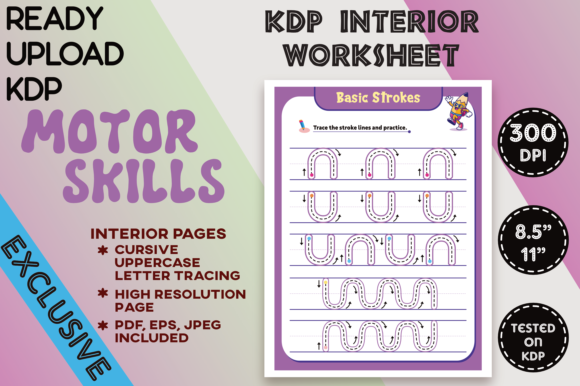
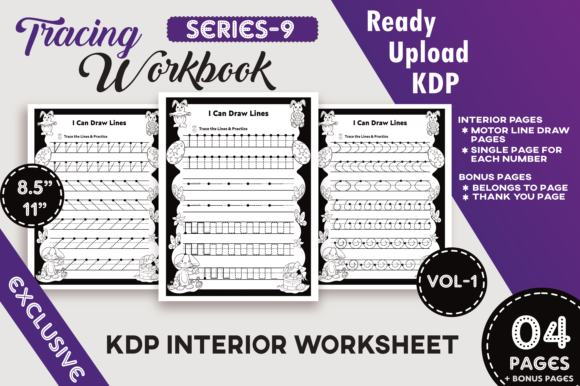
In a home setting, the transition from playtime to structured learning can be challenging for both parent and child. The primary utility of this motor skills workbook lies in its ability to turn abstract coordination exercises into tangible, manageable activities. When a two-year-old struggles to color within lines or hold a crayon correctly, it is rarely a behavioral issue; it is typically a developmental one. Using dedicated line draw practice sheets allows parents to isolate specific movements—vertical lines, horizontal lines, curves, and zig-zags—without the cognitive load of recognizing letters or numbers simultaneously.
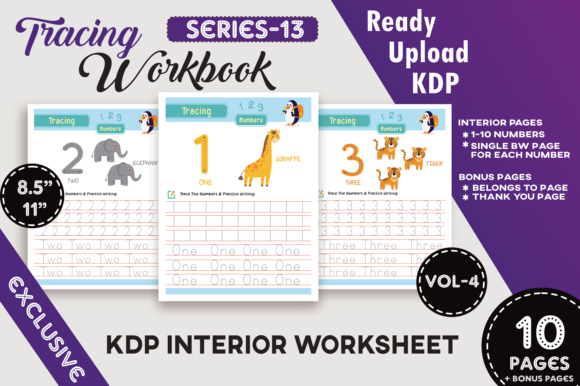
Consider the morning routine before preschool or during quiet afternoon hours. Printing out high-resolution 8.5 x 11 inch sheets provides a consistent, screen-free activity that requires minimal setup. Because this resource includes alphabet and number tracing alongside pure motor skill lines, families can scaffold learning based on the child’s daily readiness. If a child is frustrated with letter "A," reverting to simple curved line tracing maintains engagement and builds confidence without causing tears. This flexibility makes the workbook an excellent "bridge" activity for homeschooling curriculums where fine motor development needs to be tracked alongside academic milestones.
Supporting Preschool and Daycare Curriculum Goals
Early childhood educators face the unique challenge of managing varying developmental stages within a single classroom. While some four-year-olds may be ready for full sentence copying, others are still mastering the pincer grasp. Vol-1 Motor Skills Line Tracing Kids offers a standardized yet adaptable resource for differentiated instruction. Teachers can utilize the included bonus practice pages as quick assessments or warm-up exercises before more intensive writing lessons.
The inclusion of three distinct volumes in Series Nine allows educators to create progressive learning stations. Volume 1 acts as the entry point for new students or those requiring occupational therapy-style reinforcement. By having ready-to-print PDF and JPEG files at 300 DPI, teachers can produce crisp, clear worksheets that withstand repeated use or lamination for dry-erase marker practice. This reusability is particularly valuable in budget-conscious daycare centers where consumable workbooks are cost-prohibitive. Furthermore, the clean, distraction-free design of these interior pages helps neurodivergent learners focus on the physical task of tracing without being overstimulated by excessive clip art or busy backgrounds.
Strategic Advantages for KDP Publishers and Content Creators
For adults creating low-content books for Amazon KDP, the technical specifications of interior files are just as important as the educational content. This specific asset pack addresses common publishing pain points by providing tested, ready-to-upload interiors. The files have been verified for KDP compliance, eliminating the guesswork regarding bleed, margins, and resolution. Publishers can focus entirely on cover design and keyword strategy rather than spending hours formatting individual tracing pages.
- Format Versatility: With PDF, EPS, and JPEG options included, creators can easily modify or compile the content into larger anthologies or bundle it with other Series Nine assets.
- High-Resolution Quality: The 300 DPI specification ensures that lines print sharply, preventing the fuzzy edges that often lead to negative customer reviews in the competitive kids' activity book niche.
- Series Potential: As part of a nine-volume ecosystem, this product enables publishers to build cross-linked series pages, encouraging customers to purchase subsequent volumes for advancing skill levels.
- Time Efficiency: The inclusion of four high-resolution interior pages plus additional practice sheets provides immediate usable content, drastically reducing time-to-market for new releases.
Navigating Developmental Readiness and Limitations
While line tracing is universally beneficial, applying it effectively requires observing the child's physical readiness. Not every two-year-old is prepared for structured tracing, and pushing too early can create aversion to writing. It is helpful to view Vol-1 Motor Skills Line Tracing Kids as a menu of options rather than a rigid checklist. If a child cannot yet track a line visually, sensory play with sand or finger painting should precede pencil-and-paper work. The workbook is most effective when introduced after basic hand strength has been established through play.
Users should also recognize the scope of this specific volume. As the first in a three-volume subset of Series Nine, it prioritizes gross motor refinement over intricate detail. Parents seeking advanced cursive preparation or complex maze solving will need to look toward later volumes. However, this limitation is actually a strength for the target demographic; by restricting the complexity, the resource prevents cognitive overload. The "Belongs to" and "Bonus Page" structure also encourages a sense of ownership and progression, which is psychologically important for preschoolers who thrive on routine and visible achievement.
Maximizing Value Through Repetition and Variation
The true value of any handwriting sheet for kids emerges through consistent, varied practice. Digital downloads offer a distinct advantage over physical books here: unlimited reproduction. If a child masters straight vertical lines but struggles with diagonal strokes, caregivers can print ten copies of the specific problem area without wasting unused pages. This targeted repetition accelerates skill acquisition far faster than working linearly through a bound book.
Additionally, the combination of line drawing, alphabet, and number tracing in one package supports multimodal learning. A child might trace the number "3" not just as a symbol, but as a series of connected curves practiced earlier in the motor skills section. Connecting these dots cognitively reinforces neural pathways associated with writing. For adult users, whether they are parents facilitating home education or entrepreneurs building a publishing portfolio, the key is leveraging the modularity of these files. They are not merely static pages; they are components of a broader literacy ecosystem that adapts to the immediate needs of the learner and the strategic goals of the creator.
Ultimately, success with early handwriting resources depends on alignment between the tool and the user's current reality. Whether you are soothing a frustrated toddler with simple line work, organizing a preschool writing center, or streamlining your KDP production workflow, Vol-1 provides the necessary structural support. By focusing on the fundamental mechanics of movement first, we set the stage for a lifetime of confident communication. Remember to follow specialized shops for the latest series updates, as the landscape of KDP interiors and early education standards continues to evolve, offering fresh opportunities for both teaching and publishing.