Music Practice Journal - KDP Interior: A Ready-to-Use Solution for Publishers and Musicians
Creating a successful low-content book on Amazon KDP often comes down to the utility of the interior pages. For musicians, students, and instructors, generic notebooks rarely suffice because they lack the specific structure needed to track musical progress. This is where a dedicated Music Practice Journal - KDP Interior becomes an essential asset. Rather than spending dozens of hours designing grids, staff paper, and reflection prompts from scratch, publishers can utilize pre-formatted, high-resolution PDF files that are optimized for immediate publication. These interiors bridge the gap between creative design and technical formatting, allowing you to focus on cover creation and marketing while ensuring the end product offers genuine value to the user.
Solving the Formatting Headache for New Publishers
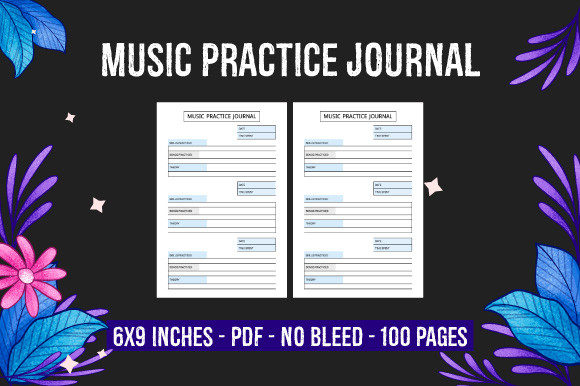
The most immediate application of this digital file is for self-publishers who want to enter the music education niche without a background in graphic design or typesetting. Music journals require precise alignment; staff lines must be evenly spaced, and writing areas need adequate margins to prevent text from being swallowed by the binding. A professionally prepared 6″ x 9″ interior eliminates the trial-and-error phase of layout design.
For example, a publisher targeting guitar students might struggle with creating chord diagram boxes that print clearly at standard KDP resolutions. By using a ready-made interior, you bypass the risk of blurry lines or misaligned grids that lead to negative reviews. The included 100 pages provide enough volume to justify a competitive price point while keeping printing costs manageable. Since the files come in both bleed and no-bleed variations, you have the flexibility to choose a trim size that best fits your cover art strategy without worrying about content getting cut off during the manufacturing process.
Real-World Utility for Music Students and Self-Learners
Beyond the publishing logistics, it is vital to understand how the end-user interacts with these pages. Adult learners and university music students represent a significant demographic for this type of journal. They are not looking for blank paper; they are seeking a system. When you offer a structured Music Practice Journal - KDP Interior, you are providing a tool for deliberate practice.
Consider the adult piano student returning to lessons after decades away. They often feel overwhelmed by the lack of tangible progress. A journal with dedicated sections for "Goals," "Tempo/BPM," "Repertoire List," and "Weekly Reflections" transforms their practice session from aimless playing into measurable development. The 6x9 dimension is particularly relevant here because it is portable enough to fit in a gig bag or backpack alongside sheet music, yet large enough to write detailed notes during a lesson. Publishers who understand this user behavior can tailor their keywords and book descriptions to highlight organization and progress tracking rather than just "music paper."
Diverse Applications Across Musical Disciplines
One of the strengths of a versatile KDP interior is its adaptability across different instruments and learning styles. While some journals are hyper-niche (e.g., specifically for drummers), a general music practice interior serves a broader audience. Here is how different users leverage these pages:
- Vocalists and Choir Members: Use the lined sections for lyric memorization and phonetic annotations, while utilizing open spaces for breath marking and dynamic cues.
- Instrumental Instructors: Many private teachers buy these journals in bulk or recommend them to students as a mandatory course material. The structured pages serve as a communication log between teacher and student, documenting assignments and feedback.
- Songwriters and Composers: Even without dedicated manuscript paper, the combination of blank space and lined areas supports the dual nature of songwriting, which involves both lyrical drafting and structural planning.
- Band Directors and Ensemble Leaders: Useful for tracking individual section rehearsals, noting problematic measures, and logging attendance or participation metrics over a semester.
Understanding these varied use cases allows you to create multiple listings using the same core interior but with different covers and metadata. A minimalist, elegant cover might appeal to classical violinists, while a bold, modern aesthetic could target jazz improvisation students, all utilizing the exact same 100-page PDF foundation.
Technical Considerations Before Publishing
While ready-to-use files significantly reduce workload, there are practical considerations to ensure a seamless launch. The distinction between bleed and no-bleed versions is critical. If your cover design extends artwork to the very edge of the book, you must select the bleed version of the interior if any elements touch the trim line. However, most practice journals function better with no-bleed interiors because they preserve a consistent inner margin, making the book easier to hold and write in near the spine. Always verify your cover dimensions against the specific PDF version you intend to upload to avoid rejection during the KDP review process.
Resolution is another non-negotiable factor. Music notation and thin grid lines require crisp printing to remain legible. The high-resolution PDF files included in this package are designed to meet Amazon’s 300 DPI standard. Uploading lower-quality conversions or screenshots can result in pixelated staff lines that frustrate musicians. Always preview the uploaded file using KDP’s online proofer to check line clarity before ordering a physical proof copy.
Strategic Advantages and Potential Limitations
Using a pre-made Music Practice Journal - KDP Interior offers speed-to-market and professional consistency, but it requires strategic positioning. Because these interiors are accessible to multiple sellers, differentiation happens primarily through your cover design, title optimization, and A+ Content. You cannot rely solely on the interior to drive sales; you must articulate why your specific version of this journal meets a unique need.
A potential limitation is the fixed page count. At 100 pages, this journal is ideal for quarterly tracking or specific course modules. However, users seeking a year-long daily log may find it insufficient. Smart publishers address this by clearly stating the duration the journal covers in the book description or by bundling the concept as a "Volume 1" series. Transparency about the page count prevents returns and ensures customer satisfaction.
Additionally, consider the paper quality inherent to KDP standard color or black-and-white options. Heavy ink coverage on staff lines can sometimes cause ghosting on the opposite side of the page. The best interiors account for this by leaving adequate white space or using lighter line weights. When selecting or reviewing your PDF files, test a single page print if possible to gauge opacity. Encouraging users to use pencils or gel pens rather than heavy markers can also be a helpful tip included in your book’s introductory page or marketing materials.
Maximizing Value Through Niche Targeting
The most successful KDP businesses treat these interiors as a foundation rather than a finished product. To truly stand out, think about the specific problems your target audience faces. Are they preparing for a graded exam? Are they managing performance anxiety? Are they tracking practice hours for college credit?
You can enhance the perceived value of the standard 100-page interior by adding a custom introduction, a resource list, or a practice challenge tracker as front or back matter. Even though the core file is ready-to-use, adding just two or three pages of unique, high-value content can transform a generic commodity into a specialized resource. This approach aligns perfectly with Google’s Helpful Content guidelines by demonstrating expertise and addressing specific user intent rather than simply filling a catalog slot.
Ultimately, the Music Practice Journal - KDP Interior serves as a reliable infrastructure for your publishing business. It removes technical barriers, ensures professional quality, and provides a functional canvas upon which you can build a brand that resonates with musicians. By focusing on the real-world needs of students and educators, and by paying attention to the technical nuances of print-on-demand production, you can turn a simple PDF file into a sustainable and helpful product in the music education marketplace.