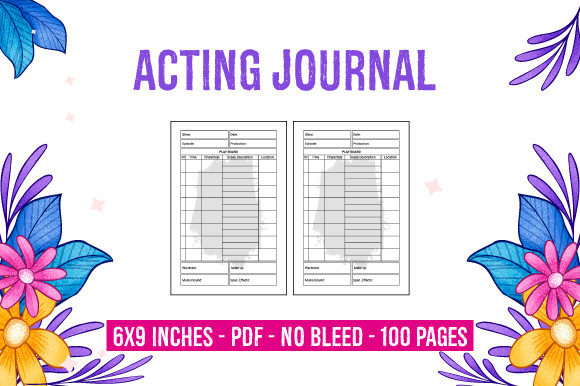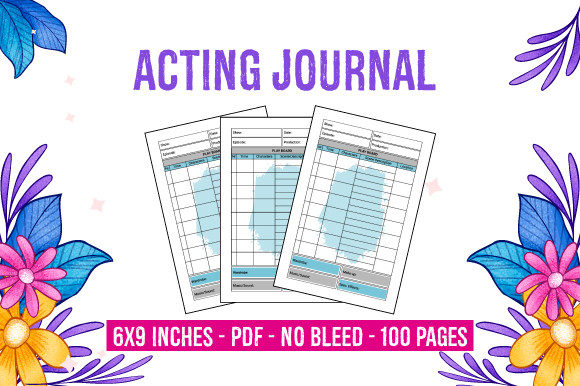
Acting Journal: Ready-to-Use KDP Interior PDF
Creating a niche-specific low-content book requires more than just a pretty cover; it demands an interior that actually serves the user's craft. For actors, drama students, and performance coaches, a generic notebook often falls short. They need structured space to analyze scripts, track character development, and record rehearsal notes. This is where a specialized Acting Journal interior becomes essential for Print on Demand (POD) publishers. By utilizing a pre-formatted, 100-page PDF designed specifically for this audience, you can bypass the tedious design phase and focus on marketing a product that solves a genuine problem for performers.
Understanding the Purpose of a Performance Diary
An acting journal is far more than a diary. It is a technical tool used to bridge the gap between an actor’s internal process and their external performance. When you publish a book with this specific interior, you are providing a workspace for creative professionals. The primary function of these pages is to organize the chaotic nature of rehearsals and auditions. Actors use these journals to break down scenes, document director feedback, explore emotional triggers, and maintain continuity across different shooting days or stage performances.
The value proposition for your KDP business lies in this utility. Beginners often struggle with how to take effective notes, while professionals need consistency. A well-designed interior guides the user through this process without being restrictive. It offers prompts and sections that encourage deeper analysis rather than blank lines that invite procrastination. When a customer buys your book, they aren't just buying paper; they are buying a system for improving their craft. This distinction is what separates successful low-content books from those that get lost in the marketplace.
Who Benefits From This Specific Interior?
Your target audience extends beyond working actors in Hollywood or Broadway. Understanding the breadth of this niche helps in crafting better metadata and ad copy. Consider the following groups who actively seek out these resources:
- Drama Students: High school and university theater majors required to keep process journals for their classes.
- Community Theater Participants: Hobbyists who treat their roles seriously and want to track their growth.
- Auditioning Actors: Professionals who need to log casting calls, sides, and feedback to identify patterns in their booking rate.
- Directors and Coaches: Educators who recommend specific note-taking methods to their students or cast members.
- Screenwriters: Writers who use acting techniques to flesh out dialogue and character motivations during the drafting phase.
Each of these segments has slightly different needs, but all benefit from the structured 6″ x 9″ format. This size is portable enough to fit in a rehearsal bag or back pocket, yet large enough to write legibly during fast-paced table reads.
Technical Specifications for Seamless Publishing
One of the most common pitfalls in KDP publishing is formatting errors that lead to rejected files or poor print quality. This ready-to-use PDF eliminates those risks by adhering to strict industry standards. The file is optimized for Amazon’s printing requirements, ensuring a smooth upload experience.
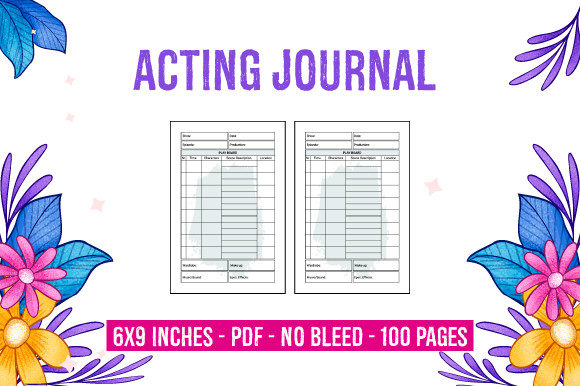
The dimensions are set to the industry-standard 6″ x 9″ inches. This trim size is the gold standard for trade paperbacks and journals because it balances portability with writing space. Crucially, this file is configured with No Bleed. This means all content stays safely within the margins, preventing text or lines from being trimmed off during the binding process. For low-content books, no-bleed interiors are often preferred because they reduce the risk of alignment issues during printing and allow for wider inner margins, which is vital for a book that needs to lay flat or be held open easily.
The resolution is high-definition, ensuring crisp lines and readable text even on standard white paper. Blurry or pixelated interiors result in negative reviews, so starting with a professional-grade source file protects your brand reputation. With exactly 100 pages, the book hits a sweet spot for spine width. Books under 100 pages cannot have text on the spine, making them harder to find on physical shelves. At 100 pages, your Acting Journal qualifies for spine text, significantly enhancing its perceived value and discoverability.
Practical Applications and Content Ideas
When marketing this journal, it helps to visualize exactly how the end-user interacts with the pages. The interior should facilitate specific acting methodologies and daily habits. Here are realistic ways this journal supports the creative process:
- Script Analysis: Dedicated spaces for identifying objectives, obstacles, tactics, and beats within a scene.
- Character Biography: Sections for exploring backstory, physical traits, vocal qualities, and psychological profiles.
- Rehearsal Logs: Daily tracking of what was worked on, breakthroughs achieved, and homework assigned by the director.
- Audition Tracker: Tables for recording dates, roles, casting directors, outfit choices, and post-audition reflections.
- Vocal and Physical Warm-ups: Checklists or logs for maintaining technical proficiency and preventing injury.
By highlighting these specific uses in your book description, you signal to potential buyers that you understand their world. You aren't selling a generic notebook; you are selling a career development tool.
Important Considerations Before Publishing
While having a ready-to-use PDF streamlines production, success in the POD space requires strategic thinking. Before you upload this Acting Journal interior, consider how you will differentiate your listing. Since other sellers may use similar templates, your cover design and keyword strategy must be unique. Research current trends in theater aesthetics—perhaps minimalist typography, vintage stage motifs, or bold modern graphics—and ensure your cover complements the professional tone of the interior.
Also, verify the category selection. "Performing Arts / Theater" and "Self-Help / Personal Growth" are often relevant categories. Placing your book in the correct niche ensures it reaches people actively searching for acting resources rather than general stationery shoppers. Additionally, think about bundling. Could this journal be part of a series? Perhaps a companion volume for directors or a specialized audition prep workbook? Building a catalog around a specific niche increases customer lifetime value.
Finally, always order a proof copy before launching. Even with a professionally formatted PDF, seeing the physical product allows you to check margin safety, paper opacity, and overall feel. Ensure the writing space is adequate and that the layout feels intuitive when held in hand. This quality assurance step builds confidence in your product and reduces the likelihood of returns. By combining a high-quality, technically sound interior with thoughtful marketing and validation, you create a sustainable asset in your KDP portfolio that genuinely serves the acting community.