Streamlining KDP Production with a Professional Bird Watching Logbook Interior
The low-content and medium-content publishing sector on Amazon Kindle Direct Publishing (KDP) has evolved from simple lined notebooks to highly specialized functional tools. Among these niche products, the Bird Watching Logbook stands out as a perennial bestseller due to the dedicated nature of the ornithology community. For publishers and designers, creating a high-quality interior from scratch requires significant time investment in layout design, typography, and field-testing for usability. Utilizing ready-to-use PDF files for journal interiors offers a strategic advantage, allowing creators to bypass the technical design phase and focus on market research, cover creation, and keyword optimization.
Technical Specifications for Print-on-Demand Compliance
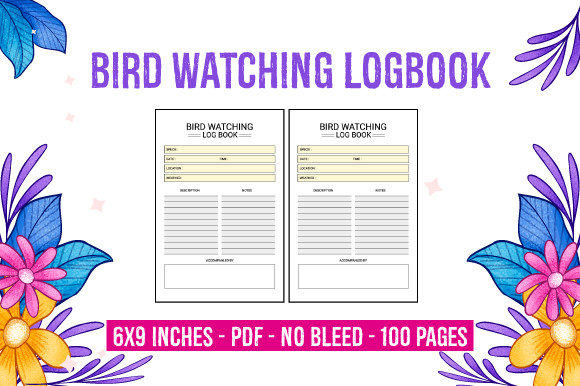
Success in the KDP ecosystem relies heavily on adhering to strict printing specifications. A pre-formatted 100-page interior designed specifically for this purpose eliminates common rejection errors associated with margins, bleed settings, and resolution. The standard 6″ x 9″ trim size is the industry sweet spot for field guides and logbooks, offering a balance between portability for outdoor use and sufficient writing space for detailed observations.
Resolution and File Integrity
Print-on-demand technology requires high-resolution source files to ensure crisp text and sharp lines. Blurry interiors are a primary driver of negative reviews in the birding niche, where users expect professional-grade reference material. Ready-to-use digital files are typically generated at 300 DPI or higher, ensuring that fine details—such as checkbox borders, silhouette illustrations, and light gray tracking fields—print clearly without pixelation. This resolution standard is critical for maintaining the perceived value of the book, distinguishing it from amateur competitors.
Bleed vs. No Bleed Configuration
Understanding bleed settings is essential for interior formatting. A "No Bleed" configuration for a 6″ x 9″ bird watching logbook ensures that all content remains within a safe margin zone, typically 0.375 inches from the edge. This is often preferable for logbooks because it prevents important data fields or prompts from being trimmed off during the binding process. Pre-made PDF interiors with no bleed settings provide a safety net for publishers, guaranteeing that the functional elements of the journal remain intact regardless of minor manufacturing variances.
Anatomy of a Functional Ornithology Journal
A generic notebook does not serve the specific needs of a birder. The value proposition of a specialized Bird Watching Logbook lies in its structured data capture. When evaluating or utilizing a 100-page template, the internal architecture must reflect the actual workflow of field observation. High-performing interiors go beyond basic lines and incorporate specific metadata fields that researchers and hobbyists require.
- Species Identification: Dedicated spaces for common names, scientific names, and family classification allow for organized indexing later.
- Environmental Context: Fields for weather conditions, temperature, wind speed, and habitat type are crucial for ecological data correlation.
- Temporal Data: Precise entry points for date, start/end times, and tide phases (for coastal birding) add scientific rigor to the log.
- Behavioral Notes: Structured sections for documenting feeding habits, nesting activity, vocalizations, and flock size distinguish a logbook from a mere diary.
- Location Tracking: Space for GPS coordinates, trail names, and specific landmarks facilitates return visits and range mapping.
This level of detail transforms a simple PDF file into a valuable research tool. For the publisher, providing this structure demonstrates expertise and meets the "Helpful Content" criteria by solving a specific user problem: how to record complex biological data efficiently in the field.
Strategic Advantages of Pre-Formated Interiors
For KDP business owners, time is the most limited resource. Developing a custom 100-page interior involves hours of grid setup, font pairing, and proofreading. Leveraging ready-to-use assets shifts the business model from product development to product curation and marketing.
Accelerated Time-to-Market
The birding market has seasonal peaks, particularly during spring migration and winter bird counts. Having a library of verified, high-resolution interiors allows publishers to capitalize on these trends rapidly. Instead of spending weeks designing a single title, a publisher can test multiple cover variations against the same proven interior. This agility enables faster iteration and better responsiveness to search volume fluctuations.
Risk Mitigation and Quality Assurance
Formatting errors can be costly. If a self-designed interior has margin issues or low-resolution graphics, the entire print run may be unsellable, leading to wasted ad spend and damaged brand reputation. Professionally prepared PDF files have typically been vetted for KDP compliance. Using these assets reduces the technical risk associated with publishing, ensuring that the physical product matches customer expectations upon delivery.
Customization and Differentiation Strategies
While using a standardized 100-page interior provides efficiency, successful publishers must still differentiate their products. The interior serves as the foundation, but the unique selling proposition often comes from how that foundation is presented and packaged.
Cover Design as the Primary Variable
Since the interior is consistent, the cover becomes the primary lever for segmentation. A single Bird Watching Logbook interior can support multiple distinct brands. One version might feature vintage botanical illustrations targeting traditionalists, while another uses modern, minimalist vector art for younger enthusiasts. Regional editions featuring local species silhouettes can also utilize the same core interior while appealing to specific geographic markets. This approach maximizes the ROI of a single digital asset.
Metadata and Keyword Alignment
The specific fields included in the pre-made interior should dictate the backend keywords and book description. If the template includes moon phase tracking, the listing should target "lunar birding logs" or "nocturnal owl journal." If it emphasizes sketching areas, keywords like "bird illustration diary" become relevant. Aligning the marketing copy with the actual features of the PDF interior ensures customer satisfaction and reduces return rates caused by mismatched expectations.
User Experience Considerations for Field Use
When selecting or reviewing a ready-to-use PDF for this niche, one must consider the physical environment in which the book will be used. Bird watching is an outdoor activity subject to variable lighting, moisture, and movement. The design of the interior pages directly impacts usability in these conditions.
Paper Opacity and Contrast: While KDP standard paper is 55# (90 GSM), high-contrast black ink can sometimes cause ghosting. Effective logbook interiors often use dark gray rather than pure black for table lines and prompts. This reduces eye strain in bright sunlight and minimizes the visual impact of any potential bleed-through. Furthermore, ample white space is not just aesthetic; it is functional, allowing users to write legibly while standing or holding the book with one hand.
Durability of Layout: Complex layouts with tiny checkboxes can be frustrating when wearing gloves or dealing with cold hands. Generous spacing and clear, bold headers improve accessibility for older demographics, who represent a significant portion of the birding community. A well-designed 6″ x 9″ interior accounts for these ergonomic factors, making the logbook a practical companion rather than a chore.
E-E-A-T and Authority in Low-Content Publishing
Google’s E-E-A-T (Experience, Expertise, Authoritativeness, and Trustworthiness) guidelines apply to product listings as much as blog posts. In the context of a Bird Watching Logbook, expertise is demonstrated through the utility of the interior pages. A template that includes accurate taxonomic categories or relevant behavioral metrics signals to both the algorithm and the customer that the creator understands the subject matter.
Publishers should view ready-to-use PDF files not as shortcuts, but as professional templates created by designers who understand KDP standards. By combining these technically sound interiors with authentic cover designs and accurate metadata, sellers build trust with a passionate niche audience. The goal is to provide a product that feels bespoke and authoritative, even if the underlying structure is sourced from a standardized digital asset.
Scaling the Birding Niche Portfolio
The versatility of a 100-page no-bleed interior extends beyond general bird watching. Publishers can adapt this core asset for adjacent sub-niches without redesigning the entire book. For example, the same logbook structure works effectively for butterfly watching, dragonfly monitoring, or general nature journaling with minimal modification to the title page or introduction. This scalability is the hallmark of a sustainable POD business model.
Furthermore, educators and youth group leaders often seek structured journals for teaching biology and ecology. A clean, professional interior suitable for adult birders can be repositioned as an educational tool for students. The 6″ x 9″ size fits easily into backpacks, and the structured data fields teach scientific method and observation skills. By recognizing these alternative use cases, publishers can extend the lifecycle and reach of a single digital file.
Final Thoughts on Asset Utilization
Incorporating ready-to-use PDF files into a KDP strategy is a decision based on efficiency and quality control. For the Bird Watching Logbook niche, where functionality dictates sales performance, starting with a professionally formatted 100-page interior ensures a solid baseline. It removes technical barriers, ensures print compliance, and allows the publisher to dedicate resources to the creative and analytical aspects of the business. Ultimately, the success of such a product depends on the synergy between a reliable interior structure and a compelling, market-aligned presentation.