Kids Lined Alpaca Journal: Streamlining KDP Interior Production
For self-publishers and Print on Demand (POD) entrepreneurs, the bottleneck is rarely the creative concept but rather the technical execution of book interiors. The Kids Lined Alpaca Journal serves as a specialized asset designed to bridge the gap between niche selection and final publication. This resource is not merely a collection of pages; it is a pre-formatted production component that integrates directly into Amazon Kindle Direct Publishing (KDP) workflows. By utilizing ready-to-use PDF files specifically engineered for low-content books, creators can bypass the repetitive design phase and focus on market research, cover design, and keyword optimization.
In the broader context of a publishing business, this digital file functions as a standardized base layer. It allows for rapid prototyping and scaling within the children’s education and activity book niche. Whether you are an educator creating supplementary classroom materials, a freelancer building a passive income portfolio, or a small business owner expanding a brand’s merchandise line, having a reliable, high-resolution interior template ensures consistency and reduces quality control issues during the upload process.
Technical Specifications and Workflow Integration
Understanding the precise technical parameters of the Kids Lined Alpaca Journal is essential for seamless integration with KDP’s printing requirements. Misalignment between interior files and cover dimensions is the most common cause of rejection or poor print quality. This resource eliminates that friction through specific formatting:
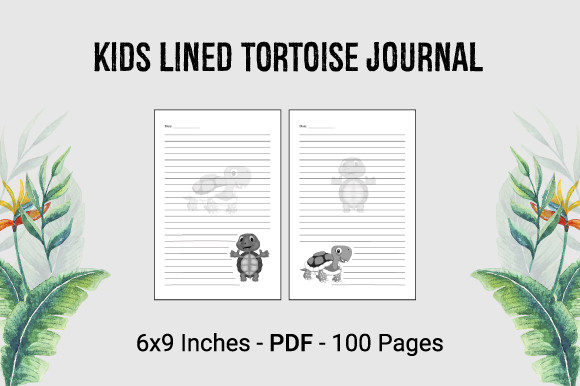
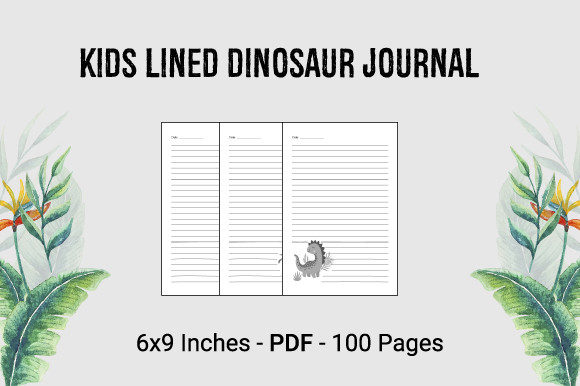
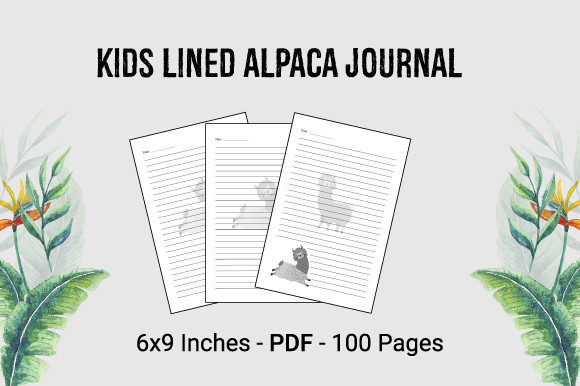
- Dimensions: 6″ x 9″ Inches. This trim size is the industry standard for trade paperbacks in the children's journal category, offering a balance between portability and adequate writing space.
- Page Count: 100 Pages. This length hits the optimal spine width threshold for KDP, allowing for text on the spine which significantly improves shelf visibility and perceived value.
- Bleed Settings: No Bleed. The interior is formatted with appropriate safety margins, ensuring that lined content remains centered and no critical elements are trimmed during the binding process.
- File Format: High-Resolution PDF. Vector-quality lines ensure crisp printing without pixelation, maintaining professional standards even at high zoom levels during digital preview.
When incorporating this asset into your workflow, treat it as a locked foundation. Because the file is "No Bleed," your cover design must be calculated based on the exact 6x9 trim size plus the spine width derived from the 100-page count. Attempting to resize this PDF or alter margins post-download can corrupt the alignment. Instead, build your project settings around these fixed specifications to guarantee compatibility.
Strategic Application Across Project Phases
The utility of the Kids Lined Alpaca Journal extends beyond simple file insertion. Its application varies depending on where you are in the product development lifecycle. Effective publishers leverage this asset differently during planning, execution, and post-publication phases.
Pre-Production and Niche Validation
Before committing to a full launch, use this interior as a minimum viable product (MVP) tool. In the research phase, you may identify multiple micro-niches within the alpaca or farm animal theme. Rather than designing unique interiors for each test, apply this standardized lined format to validate demand. If the "Alpaca Journal for Girls" outperforms "Farm Animal Writing Practice," you have validated the niche using a consistent variable. This approach isolates the cover art and keywords as the primary performance drivers, providing cleaner data for decision-making.
During Production and Asset Management
During the active creation phase, this PDF acts as a time-compression mechanism. For marketers and freelancers managing multiple SKUs, the hours saved on formatting 100 individual pages can be reallocated to higher-value tasks. Specifically, this interior pairs effectively with AI-generated cover art or stock illustration libraries. Since the interior is generic lined paper with a thematic element, the cover carries the weight of differentiation. Your workflow shifts from "designing a book" to "packaging a product." Ensure your file naming conventions include metadata like "6x9_100pg_NoBleed_Alpaca" to prevent version control errors when managing dozens of similar assets.
Post-Publication and Series Expansion
After publishing, the Kids Lined Alpaca Journal facilitates brand cohesion. If you plan to expand into related products—such as coloring books, math workbooks, or teacher guides—maintaining the same 6x9 trim size and page count creates a uniform series appearance. Customers who purchase one item are more likely to buy others if they physically match on a shelf or in a bundle. Furthermore, because the interior is static, you can easily update covers seasonally (e.g., back-to-school, holiday gifts) without re-uploading or re-proofing the interior file, streamlining long-term catalog maintenance.
Quality Control and Platform Compatibility
Even with pre-made assets, rigorous quality assurance is non-negotiable. Digital previews do not always reflect physical output. When using this high-resolution PDF, implement a verification checklist before hitting publish:
- Download the KDP Previewer: Never rely solely on the online browser preview. Download the dedicated previewer tool to check for margin warnings that the web interface might miss.
- Verify Spine Calculation: Confirm that your cover template matches the 100-page cream or white paper selection. A mismatch here will result in the cover wrapping incorrectly around the Kids Lined Alpaca Journal interior.
- Check Line Weight: Zoom in to 100% and 200% within your PDF viewer. Lines should remain sharp and dark grey/black. Faint lines often print invisibly on standard POD paper.
- Test Print: Order a physical proof copy. Verify that the "No Bleed" margins provide enough thumb space for a child to hold the book without obscuring the writing area.
This due diligence protects your account health and reduces return rates. Professional publishers understand that a ready-to-use file is a starting point, not a guarantee. Your responsibility is to ensure the asset meets current platform standards, which can change without notice.
Enhancing Value Through Customization
While the Kids Lined Alpaca Journal is ready-to-use, strategic customization can increase its marketability without requiring a complete redesign. Consider how this interior interacts with other resources to create a unique selling proposition.
Front Matter Addition: Use a PDF editor to insert a "This Book Belongs To" page or a simple name tracing sheet as page 1. This adds personalization value while keeping the remaining 99 pages intact. Ensure any added pages respect the original 6x9 no-bleed constraints.
Keyword Alignment: The interior content supports specific long-tail keywords such as "primary composition notebook," "handwriting practice journal," or "farm animal themed diary." Align your backend keywords and book description with the actual utility of the lined pages. Avoid misleading metadata; if the interior is strictly lined, do not tag it as a "coloring book" just to capture traffic. Relevance drives conversion and positive reviews.
Cross-Promotion Integration: Utilize the first or last few pages (if editable) or the book description to link to complementary assets. If you sell digital downloads, planners, or other journals, this physical book becomes a touchpoint for your broader ecosystem. For educators and bloggers, this journal can serve as a lead magnet or a low-cost entry product that introduces customers to premium offerings.
Operational Efficiency for Scaling Publishers
For entrepreneurs and small business owners, efficiency dictates profitability. The Kids Lined Alpaca Journal represents a modular component in a scalable system. By standardizing your interior specs to 6x9, 100 pages, no bleed, you create a reusable framework. Cover designers can work from a single template, ad spend can be optimized across similar form factors, and customer service inquiries regarding sizing are minimized.
This asset also supports diversification. If your primary revenue stream faces saturation, pivoting to adjacent niches using the same interior infrastructure allows for rapid testing with minimal sunk costs. The goal is to reduce the marginal cost of each new SKU. When the interior is solved, your mental energy focuses entirely on marketing, audience building, and trend analysis.
Ultimately, successful KDP publishing is about matching the right asset to the right market need with operational precision. The Kids Lined Alpaca Journal provides the technical reliability required for professional output. By treating it as an integrated part of your business workflow rather than a standalone file, you ensure that every publication meets both creative standards and commercial objectives. Focus on the packaging, validate the technical specs, and leverage the time savings to build a sustainable, quality-driven catalog.